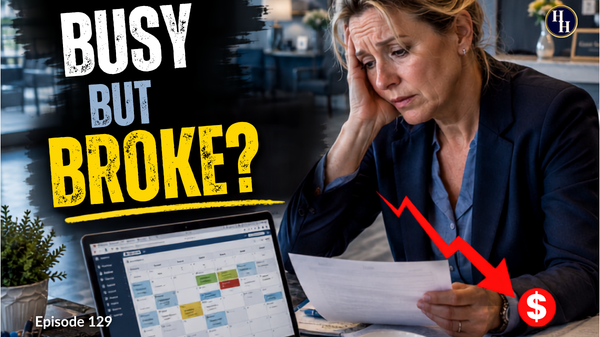
If your rooms are selling but your profit still feels thin, your hotel pricing may be the problem.
This post shows you the common hotel pricing mistakes independent hotel owners make and how to start fixing them.
.
Ever feel like your hotel is full, your team is flat out, and somehow the money still feels tight?
That is a horrible feeling.
You look around and think, “We’re busy. So why doesn’t it feel profitable?”
You’re not alone. Many independent hotel owners are not losing profit because they are lazy, careless, or bad at business.
They are losing profit because pricing has become guesswork in a nice jacket.
.
Hi, I’m Gerry MacPherson. I’ve spent over 30 years in hospitality, and I help independent hotel owners get more bookings, more time, and less stress.
In the next few minutes, I’ll walk you through three things.
Why busy weeks can still leave you short.
Where pricing mistakes hide.
And one simple shift you can use this week to stop guessing.
By the end, you’ll know how to look at your room rates with less panic and more calm.
And no, you do not need to become a revenue management wizard who speaks only in acronyms. Nobody wants that at breakfast.
.
The First Mistake: Thinking Full Rooms Mean Good Pricing
Here’s where most hotel owners get stuck.
They use occupancy as the main sign of success.
If the rooms are full, the hotel must be doing well.
And honestly, that makes sense.
Empty rooms feel like failure. Full rooms feel like relief. There is something comforting about seeing arrivals stacked up in the system. It feels like the hotel is breathing.
But here’s the part most people miss.
A full hotel can still be underpriced.
Let’s say you sell 20 rooms at $95.
That feels good.
But what if those same rooms could have sold at $115 because demand was strong, there was an event nearby, and guests were ready to pay more?
That is $20 left behind on every room.
Twenty rooms.
That is $400 in one night.
No alarm goes off. No one bursts through the lobby shouting, “You have lost $400!”
Although, to be fair, that would make revenue meetings more exciting.
Instead, the loss hides inside a good-looking occupancy number.
The fix is not to panic and double your prices.
The fix is to stop asking only, “How full are we?”
Ask, “Are we full at the right price?”
That one question changes the conversation.
Small change, big difference.
.
The Second Mistake: Copying Competitors Without Knowing Their Game
Now, this might surprise you.
Competitor pricing can help you.
But copying competitors can hurt you.
There is a big difference.
A lot of hotel owners check nearby properties and think, “They’re charging $89, so we should charge $85.”
It feels safe.
It feels sensible.
It feels like keeping an eye on the market.
But here’s where it gets interesting.
You do not know why they are charging that rate.
They may be desperate.
They may have poor reviews.
They may have a different cost base.
They may be trying to fill midweek rooms.
Or, and this is always possible, they may also be guessing.
Copying another hotel’s rate without knowing their strategy is like following a stranger through an airport because they look confident.
You may end up at the right gate.
You may also end up in baggage claim wondering what happened to your life.
The better move is to use competitor rates as context, not instruction.
Look at them, yes.
But then come back to your own hotel.
Ask:
“How quickly are we filling?”
“What type of guest are we attracting?”
“Are we getting the right bookings at the right price?”
“What makes our property worth more?”
Your pricing should reflect your value, not just your neighbour’s nerves.
[SLIDE: “Competitors give context. Your value sets the rate.”]
That is especially true for independent hotels.
You are not a beige box with a bed and a key card.
You may have local charm, personal service, better breakfast, sea views, garden space, history, character, or a host who remembers returning guests by name.
Those things matter.
Price like they matter.
.
The Third Mistake: Dropping Rates Too Fast
This one is common.
A quiet few days appear on the calendar.
Your stomach tightens.
You check the booking pace.
Still quiet.
Then the thought arrives.
“Maybe we should drop the rate.”
I get it.
That thought feels practical. It feels like action. It feels better than sitting there watching empty rooms stare back at you like disappointed relatives.
But dropping rates too fast can create a bigger problem.
You train guests to wait.
If people learn that your prices fall whenever things get quiet, some will hold back. They will hover. They will refresh. They will wait for the bargain.
And the worst part?
You may still attract bookings, but not always the bookings you want.
Lower rates can bring more price-sensitive guests.
Not bad guests.
Just guests who judge everything through the price they paid.
And sometimes, strangely, the cheaper the rate, the higher the expectation.
It is one of hospitality’s great mysteries, right up there with guests who use every towel in the room after staying six hours.
The fix is to pause before you cut.
Ask:
“Is this a real demand problem, or am I reacting to fear?”
“Have I checked local events?”
“Have I reviewed previous years?”
“Could I add value instead of cutting price?”
For example, instead of reducing a room from $120 to $99, you might hold the rate and add a small direct booking perk.
Maybe breakfast.
Maybe late checkout.
Maybe parking.
Maybe a local guide.
The point is simple.
Protect the rate where you can.
Because once a guest sees your room as cheap, it takes work to rebuild the value.
.
The Fourth Mistake: Pricing From Fear Instead of Value
Here’s the part most people miss.
Pricing is emotional.
It looks like maths, but underneath it sits fear.
Fear of empty rooms.
Fear of bad reviews.
Fear of guests choosing the hotel down the road.
Fear of being too expensive.
So many owners play it safe.
They price a little lower than they should.
Not wildly lower.
Just enough to feel comfortable.
But that comfort has a cost.
Over one night, it may look small.
Over one week, it starts to sting.
Over one year, it can become the difference between breathing room and constant pressure.
The reframe is this.
You are not trying to charge everyone more.
You are trying to charge the right guest the right price at the right time.
That is not greedy.
That is running the business properly.
You still care about guests.
You still offer fair value.
You still deliver a good stay.
But you stop apologising for being worth something.
Independent hotel owners often underprice because they compare themselves to larger brands with bigger teams and deeper pockets.
But your strength is not size.
Your strength is connection.
Guests will pay for warmth, care, location, trust, and a stay that feels human.
So before you lower your rate, ask:
“Have I clearly shown the value of this stay?”
Because sometimes the issue is not the price.
Sometimes the issue is that the guest cannot see why the price makes sense.
.
The Simple Weekly Shift: Look Seven Days Ahead
Now let’s make this practical.
You do not need a huge system today.
This is Overwhelm week, so we are not adding a mountain to your desk.
We are removing a bit of fog.
Here is the shift.
Once a week, look seven days ahead.
That is it.
Not six months.
Not a giant spreadsheet that makes your soul leave your body.
Just seven days.
Pick a quiet time.
Maybe Monday morning.
Maybe Friday before lunch.
Look at your calendar and ask:
“Where are we filling faster than expected?”
“Where are we weaker than expected?”
“What is happening locally?”
“Which nights deserve a small rate increase?”
“Which nights need support, but not panic?”
This gives you a rhythm.
And rhythm creates calm.
If next Saturday is already 80% full, maybe you do not need to keep the same rate.
If Wednesday is soft, maybe you need a small direct booking offer.
If a local event is coming and you missed it last year, now you catch it.
This is also where Your Independent Hotel Blueprint can help. It gives you a practical way to look at your hotel with less chaos and more clarity.
Not as another thing to worry about.
As a guide.
Because sometimes you do not need more information.
You need the right next step.
.
What is your biggest pricing challenge right now?
Is it knowing when to raise rates?
Knowing when to discount?
Keeping up with competitors?
Or just finding time to look at it properly?
Leave your answer in the comments. I read every one.
.
Here Are Your Key Takeaways
- Full rooms can hide weak rates
- Competitor prices are not commands
- Fast discounts can train guests
- Fear quietly lowers profit
- Weekly reviews reduce guessing
.
In Conclusion
Pricing can feel heavy because it touches everything.
Your bookings.
Your cash flow.
Your confidence.
Your stress.
And if you have been guessing, reacting, or copying competitors, please hear this clearly.
You are not failing.
You are running a demanding business with too many moving parts and not enough breathing space.
But you can start making better pricing decisions without fixing everything today.
Start with one calm weekly review.
Look seven days ahead.
Spot one opportunity.
Make one adjustment.
Then watch what happens.
Small steps count.
If you want help putting this into action, grab Your Independent Hotel Blueprint. It walks you through the key areas of your hotel so you can spot gaps, fix leaks, and grow with less stress.
And if you are ready to go deeper, I break this down step by step inside The Hotel Owner’s Roadmap: 90 Days to More Bookings, More Time, and Less Stress course.
Thanks for reading.
If this helped, subscribe to the Hotelier Helpcast podcast and YouTube channel, and feel free to buy us a coffee.
Next episode, we’ll talk about, “How hotel pricing actually works without the jargon.”
You don’t need to have it all figured out, you just need the next right step. Thanks for listening and I’ll see you next time.